
Michael Frayn is an outstandingly accomplished writer. He is renowned for his plays, perhaps most notably Copenhagen. His non-fiction works include The Human Touch, a tremendous piece of research and analysis about mankind’s role in the universe. His fiction novels include Towards the End of the Morning, originally published in 1967, about the post-halcyon day of Fleet Street. And then there’s this, A Landing on the Sun (the cover is shown on the home page), which came out in 1991.
Why this right now? I was minded to re-read the book when I read a story in a newspaper last February, about the opening this year of a handful of luxury hotels in London. The writer said: “The one I’m most intrigued by…is the Waldorf Astoria Admiralty Arch, not least for the sheer boldness of turning this landmark into a hotel.” The landmark in question, Admiralty Arch, which in fact has three arches which bestride The Mall at the opposite end to Buckingham Palace, is the main setting for Frayn’s intriguing novel. (The hotel is scheduled to open sometime this autumn.)
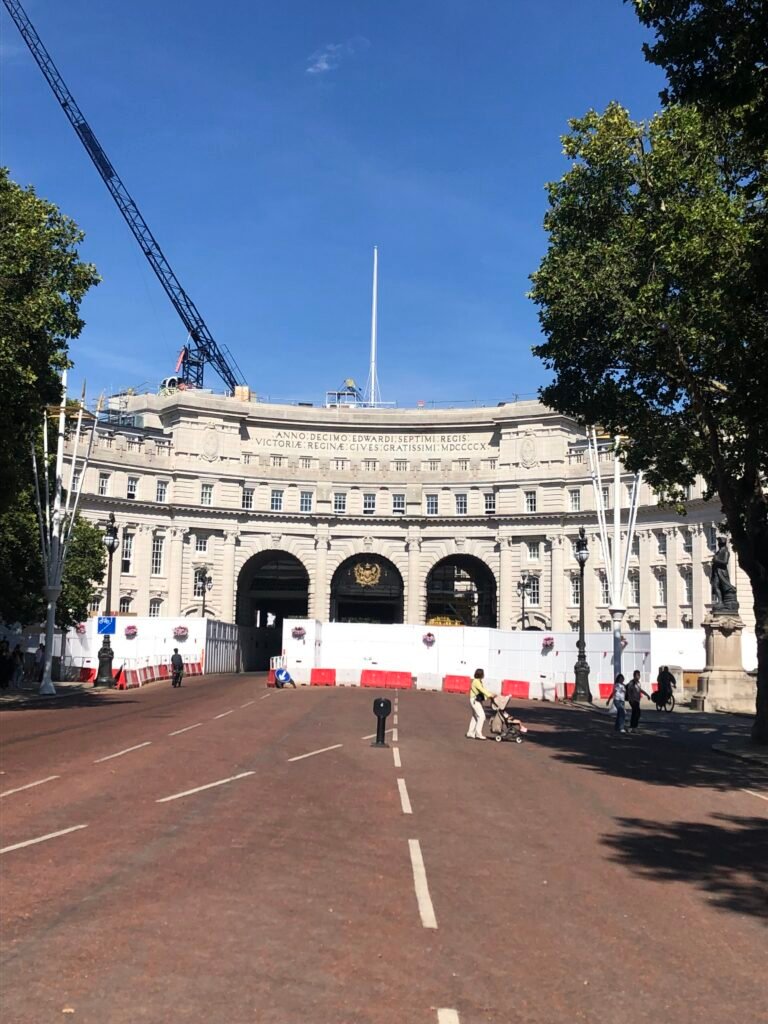
Until 2011, the building housed government offices, which was its function when Frayn wrote his novel. It is an extraordinary story about Stephen Summerchild, a civil servant whose body was found in Spring Gardens, just beside Admiralty Arch. The Times had recorded that “Mr Summerchild appeared to have died as a result of a fall”. A young member of the Cabinet Office, Brian Jessel (who narrates the tale in the first person), is appointed to look into the circumstances surrounding Summerchild’s death, not least because of the secrecy and uncertainty regarding the project he was working on at the time of his demise in collaboration with an enigmatic Oxford don called Dr Elizabeth Serafin.
Jessel pieces together the day-to-day mundanities of their work together, which include some delightfully civil-service-like observations – “Not that I don’t have the most intense fellow-feeling for Summerchild. It’s nearly 2 o’clock and he has had no lunch.” He reads files and notes, and he listens with increasingly avid interest (“I’m out on the streets again myself, with the tape-recorder to my ear”) to the tape recordings they have made concerning the work of their ‘unit’. Gradually another truth emerges: the two of them are not merely engaged in a government project; they have become a couple. They have parted from their respective partners and effectively set up home at the Admiralty, eating there and even lying out on the roof to enjoy the summer weather. They were not in a hotel, as some well-to-do guests will soon be, but in many respects they were living there. Frayn’s telling of how Summerchild’s superiors come to view this arrangement – should we say ‘a departure from the norm’? – is brilliantly executed.
It is not a spoiler (the reader knows he is dead from the outset) to suggest that Jessel concludes the civil servant’s death was a consequence of his clambering about these government buildings. “Summerchild was a climber when he was younger,” he notes. “Yes, that’s the way he went. There’s nothing more to know.” Except perhaps to add that Frayn delivers the denouement with perfect poignancy.