
Budapest, the capital of Hungary, is essentially composed of two parts: Buda, the area to the west of the River Danube, and Pest, the part to the east. Buda is where the royal palace and grandest villas are; Pest is where most people live and and where most of the city’s work gets done. In order to undertake that, the locals frequently make use of trams such as the one that is featured on the home page.
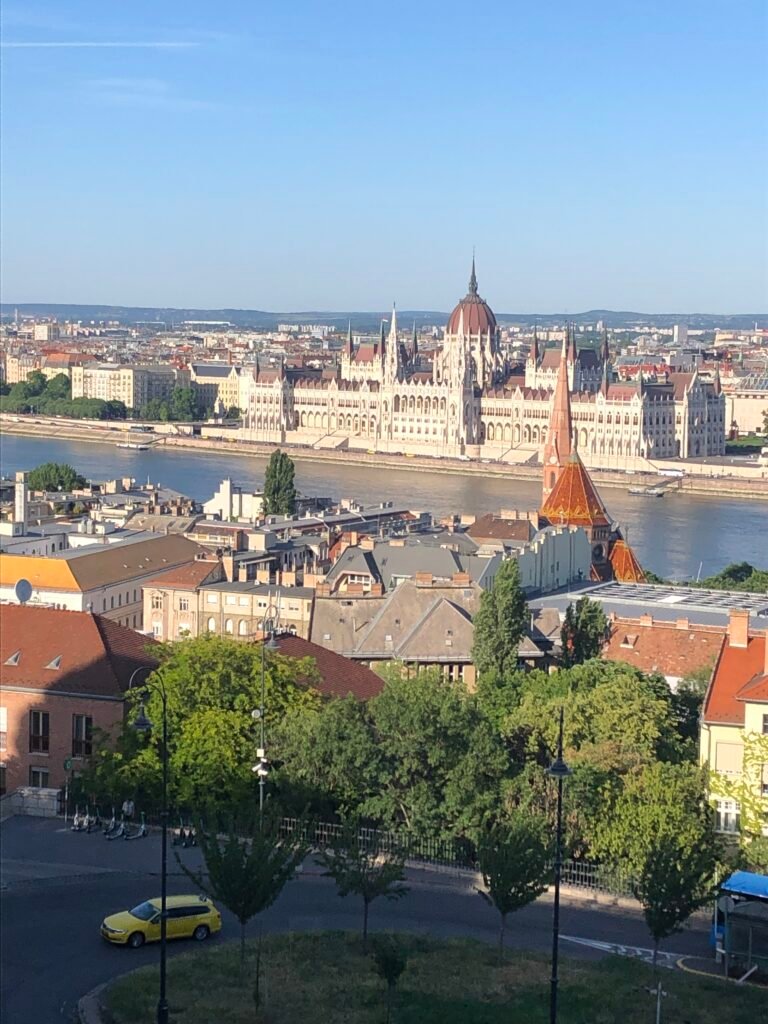
Among the people working in Budapest are, of course, its politicians and civil servants. Their offices are within an enormously imposing building: the third largest parliament in the world. (If you’re wondering, and of course you are, in that context it ranks behind only those of Thailand and Romania.) This may be the primary architectural achievement in the city but it’s far from the only one. St Stephen’s Basilica, the largest church in Budapest, is named for the first king of Hungary. Furthermore, having been a spa destination since Roman times, Budapest may today be the finest spa location in Europe, with elegant facilities to match that distinction.
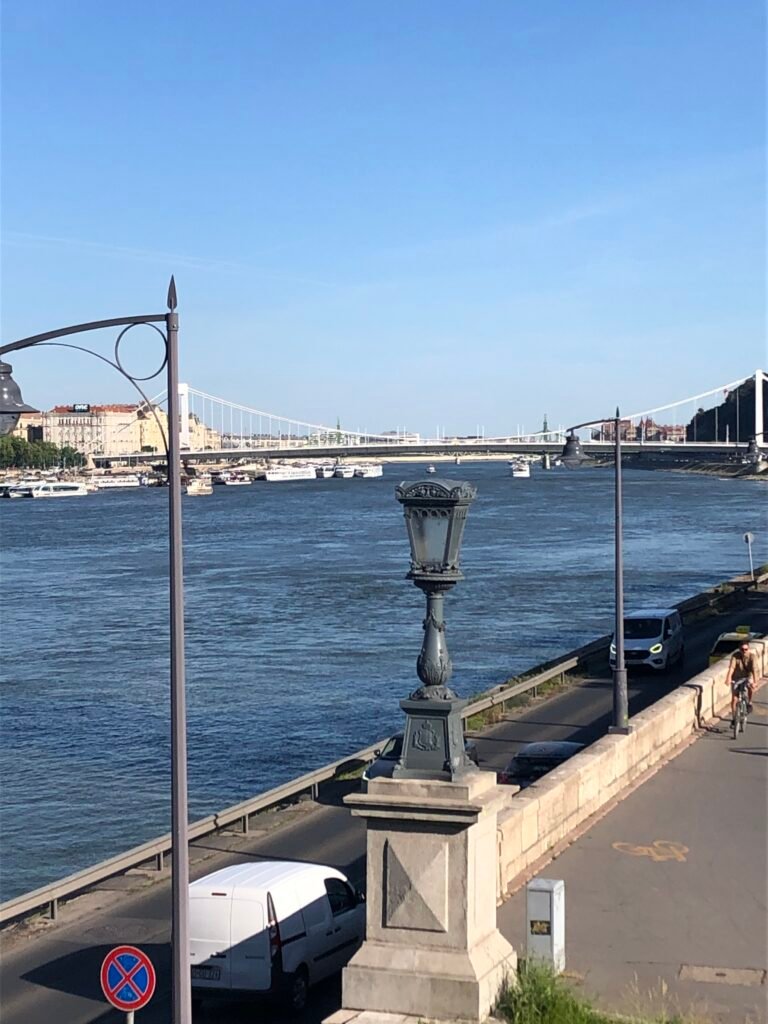
As with the Thames in London, the Danube is integral to Budapest, and its scale is even grander. Although the hot summer that has scorched much of Europe has had its effect here, too. In places the depth of the river has fallen to a matter of centimetres. Among the discoveries occasioned by this were the remains of a woolly mammoth and a Nazi warship. Back on dry land, the overall ambience of the place is one of gentle grandeur. Among its more notable landmarks are its ruin bars; properties which had gone to seed but have now been repurposed to form part of the city’s vibrant night life.
Until earlier this year, the Hungarian prime minister was Viktor Orban. He had been his country’s premier since 2010, over the years generally presiding over corruption, being a permanent thorn in the side of the European Union (even though the EU steered millions of euros every year in his country’s direction) and being a big admirer of Vladimir Putin’s government in Russia. Also, said one observer: “Without imprisoning or killing a single journalist, press-freedom predator Viktor Orban nearly wiped out Hungarian independent journalism.” All considered, then, it came as something of a shock, and a huge relief to Brussels as well as to many of the native population, when Orban decisively lost the general election this past spring, being replaced by Peter Magyar.
While I was in the city, I finished reading the final book in Adam Lebor’s evocative ‘Danube Blues’ trilogy, this one being called Dohany Street. Aside from the compelling nature of the storylines, the author successfully conjured up the pervasive hint of menace which exists in a country run much as Orban ruled Hungary. But that’s over now. On a (considerably) lighter note, the inaugural World Athletics Ultimate Championship will be held in the city, starting next Friday. If not for that, I heartily recommend you try to visit Budapest sometime when you can.